Stealing horses
Out Stealing HorsesStealing horses is both Jon’s invitation to a dangerous summer adventure and the name for a brief freedom that cannot be recovered. In 1948, when Trond Sander is fifteen, the boys enter a clearing where horses are kept, mount them as they run, and gallop through the forest. The act begins as a shared game charged with imagined outlaw danger; years later, at Odd’s funeral, its remembered future closes. The phrase thus links the bodily exhilaration of boyhood to the knowledge that a friendship, like a particular summer, can end without warning.
The invitation and its private meaning
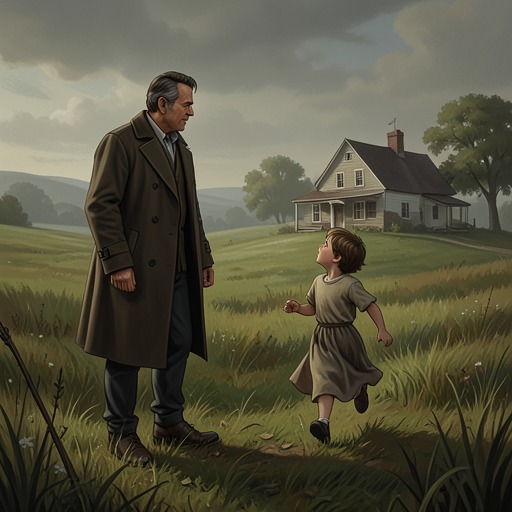
The episode opens in the first days of July, three years after the Germans have left. Trond is spending the summer with Trond’s father, who never speaks about the war. Against that silence, Jon arrives at the cabin door with a plan: “We were going out stealing horses.” The words are not a literal account of an established criminal enterprise. They announce a new escapade, and give it the dangerous glamour of an outlaw story.
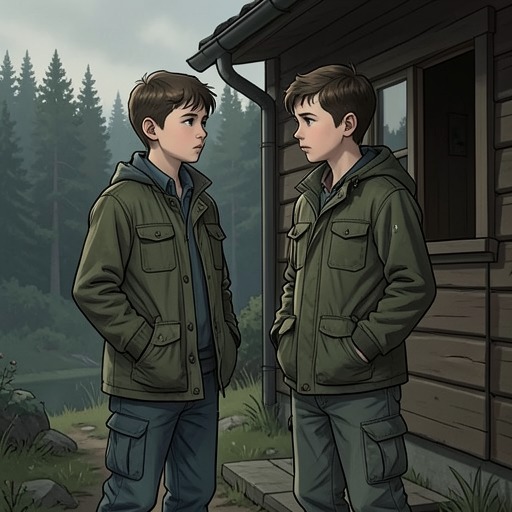
Jon is Trond’s same-age companion for the summer, and the invitation belongs to the two of them alone. Jon has younger twin brothers, Lars and Odd, but Trond understands that this outing is meant for no one else. If Trond had refused, Jon would have gone alone, though neither the danger nor the adventure would have been the same. Their exclusivity is part of the phrase’s meaning: stealing horses is not simply an activity but a private pact between two boys.
That pact grows out of an established pattern of secret excursions. Jon comes often, at any hour, for shooting hares, walking in moonlit forest, fishing for trout, or balancing on logs moving down the river. The boys hide these activities from Trond’s father. Jon does not knock; he quietly approaches from the river and waits until Trond senses him and opens the door. The repeated, almost wordless arrival makes the invitation feel less like a one-off dare than the next step in a friendship built around shared risk and unspoken understanding.
The approach to the horses
The boys know that the activity changes how they see themselves. Walking down the road, they feel that they look like criminals and imagine that their faces and gait give them away. Cowboy magazines supply the law of the West: capture means a rope and a hanging. They know they are far from the places described in those stories, but their anxious reasoning makes the imagined punishment feel close. The danger is partly real and partly borrowed from fiction; the borrowed story gives their trespass its scale.
Barkald’s grey house, standing at the edge of the forest, seems newly threatening as they pass. The boys continue down the gravel road, cross Barkald’s field, and enter the dark spruce wood. Its soft moss and dimness give way to widening light and the glint of two strands of barbed wire: the boundary of the clearing. Jon’s scout-like call to be prepared and Trond’s answer turn their approach into a staged test of nerve. Trond climbs onto a branch above the horses’ route and waits, balancing himself as the sound of hooves approaches.
The ride and its abrupt reversal
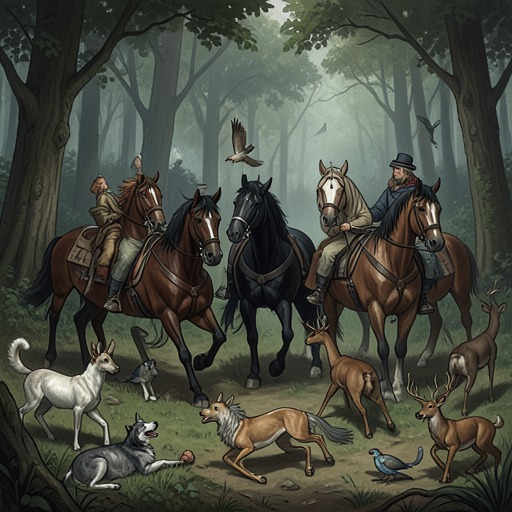
When the horses arrive, Trond drops from the branch onto the back of the nearest one, landing too close to its neck. The animal’s bones strike him painfully; nausea rises, tears come, and he has to cling to its mane while trying not to be sick. The scene refuses the effortless ease of a film stunt. Trond is not a polished rider but a boy holding on through discomfort as the horse accelerates into a gallop and the second horse follows.
For a moment, the ride transforms that physical distress into exhilaration. Trond hears Jon yell, then finds himself surrounded by the rush of movement and, as the hoofbeats die away, by birdsong. He answers with a yell of his own and feels completely happy. The sudden sense of release lasts only until the barbed wire appears ahead. The horses turn before the fence; Trond is thrown from the one he is riding and carried through the air over the boundary. The adventure’s physical climax is therefore also a reversal: the same speed that seemed to free him from ordinary limits leaves him with no control over where he lands.
The memory’s ending
The ride acquires a different weight in Trond’s recollection of Odd’s funeral. As the small coffin is about to be lowered, Lars breaks away from his mother and runs in circles near the churchyard wall. Gradually the mourners turn from the grave to watch him, until a neighbour catches and lifts him. Lars’s legs keep running, but he makes no sound. Trond looks at Jon; Jon looks directly back, without responding when Trond slightly shakes his head.
In that exchange, Trond thinks that they will never go out stealing horses together again. The thought is not presented as a practical decision or explained as a spoken promise. It arrives at the graveside, beside the coffin of Jon’s brother, and marks the remembered adventure with an ending the boys had not foreseen when they set out. Trond identifies it as one of the three things he remembers from that day, and says it made him sadder than anything else at the churchyard. The phrase that once named their daring becomes a measure of what has been lost: not only a ride, but the shared future the boys had assumed would continue.
The older Trond’s account returns to the summer from a present in which the memory has begun troubling him again after many years. Its structure makes the adventure’s two meanings inseparable. The boys’ imagined outlaw drama belongs to the moment of action; the funeral supplies the later knowledge that turns the ride into a last time. Stealing horses remains vivid for its speed, pain, birdsong, and sudden fall, but its deepest consequence is the retrospective recognition that this particular companionship would not resume.